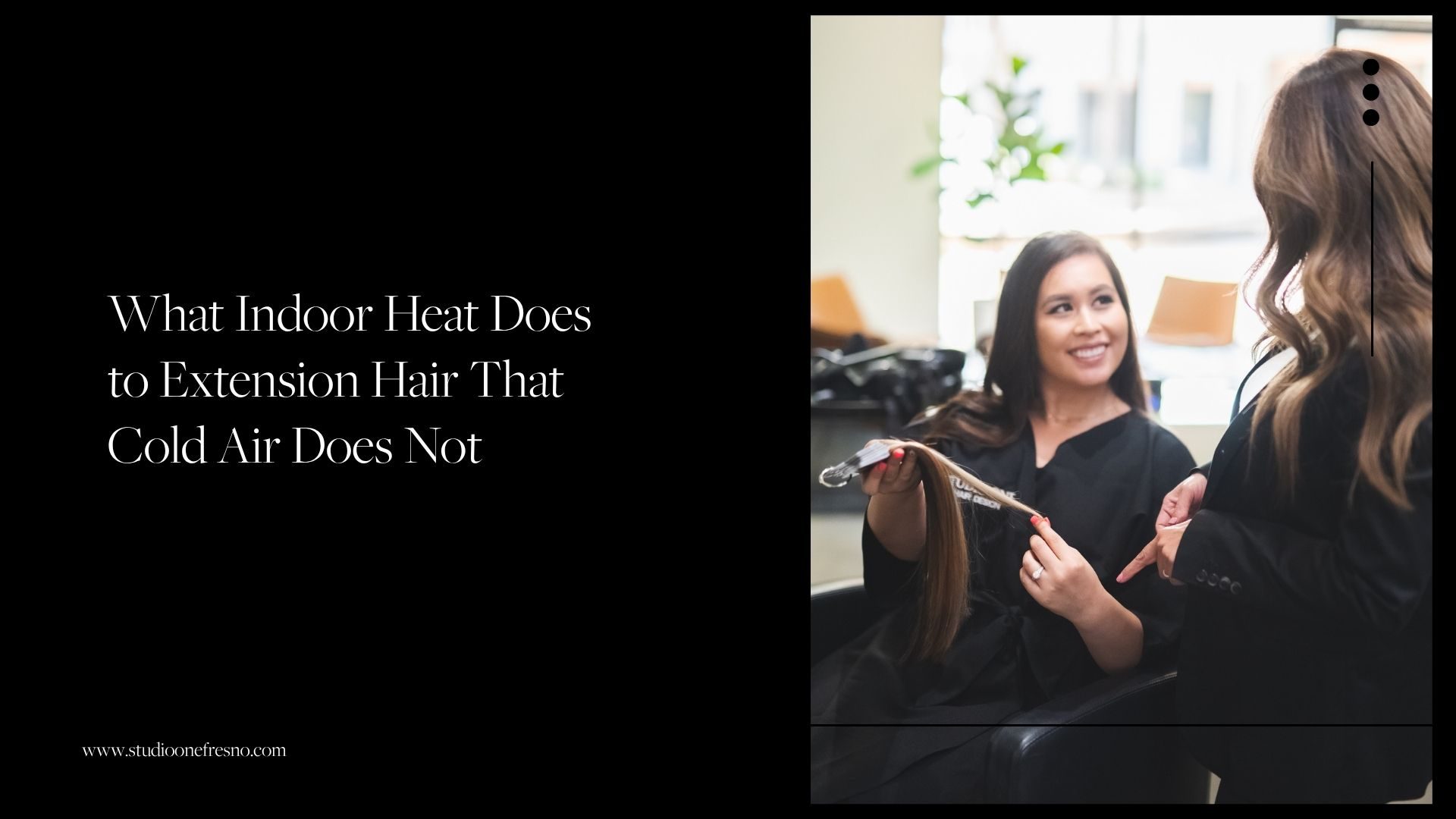
Clients asked me the same thing more than once at the chair this week: why does my extension hair feel drier now that it's cold? The cold air gets the blame. Most of the time, the indoor heat is doing more damage than the weather outside.
Here is what's actually happening, and how to care for your extensions through a Fresno winter so they last the way they should.
Forced-air heat pulls moisture out of the hair
Your heater runs on forced air. That warm air moving through the house is dry air. It lowers the humidity in every room you sit in, and it does it for hours at a time.
Your own hair makes oil at the scalp and feeds it down the strand. Extension hair does not. Once the moisture is gone, nothing replaces it from the root. So extension hair feels the dryness first, and it feels it longer.
That's the piece most people miss. Cold air outside is not the problem on its own. The heated, dry air you sit in all evening is.
Low indoor humidity changes how the hair behaves
Fresno winters are dry to begin with. Add a heater and the indoor air gets drier still.
Low humidity makes the cuticle rough. Hair that was smooth in October starts to tangle at the nape and look dull by the ends. You brush more, you tug more, and the hair that cannot replace its own moisture takes the wear.
This is why a routine that worked all summer stops holding up in November. The air changed. The hair did not change with it.
The indoor-outdoor cycle is the real stress
Here is the part that adds up over the season. You leave the house into cold, dry air. You spend the day in heated, dry air. You go back out into the cold. Then home to the heat again.
Each swing pulls at the hair a little. One day is nothing. A whole winter of it is what leaves extension hair feeling brittle by February.
The fix is not one product. It's accounting for what happens indoors, not only what happens outside.
Your winter home care, step by step
Moisture is the whole job this season. Here is where to put your effort.
- Add a hydrating mask on a set day each week and leave it on the mid-lengths and ends, never the bonds or rows.
- Use a leave-in before you walk out the door. That's your barrier against the dry air you're about to sit in all day.
- Turn your heat tools down. High heat on already-dry hair in a dry room is the fastest way to fry the ends.
- Brush with a loop brush, gently, top to bottom. Winter tangles need patience, not force.
- A humidifier in the room where you sleep gives the hair back some of what the heater takes all night.
One thing I'll say plainly: ask us before you buy a new winter product. We know your hair, your color and your extensions. Protein is not always the answer, and the wrong one can make dry hair feel worse. That recommendation is free, and it's specific to you.
New here, or thinking about extensions
Cat just came back from training in Nashville on new extension methods, including K-tip and mesh integration, so we can fit more women and more hair types than before. Extensions at Studio One always start with an application and a consult, not a direct booking, so we can see your hair first.
Start with the extensions application. If you already wear extensions from us and winter has them feeling dry, the same page is the right place to check in about care.